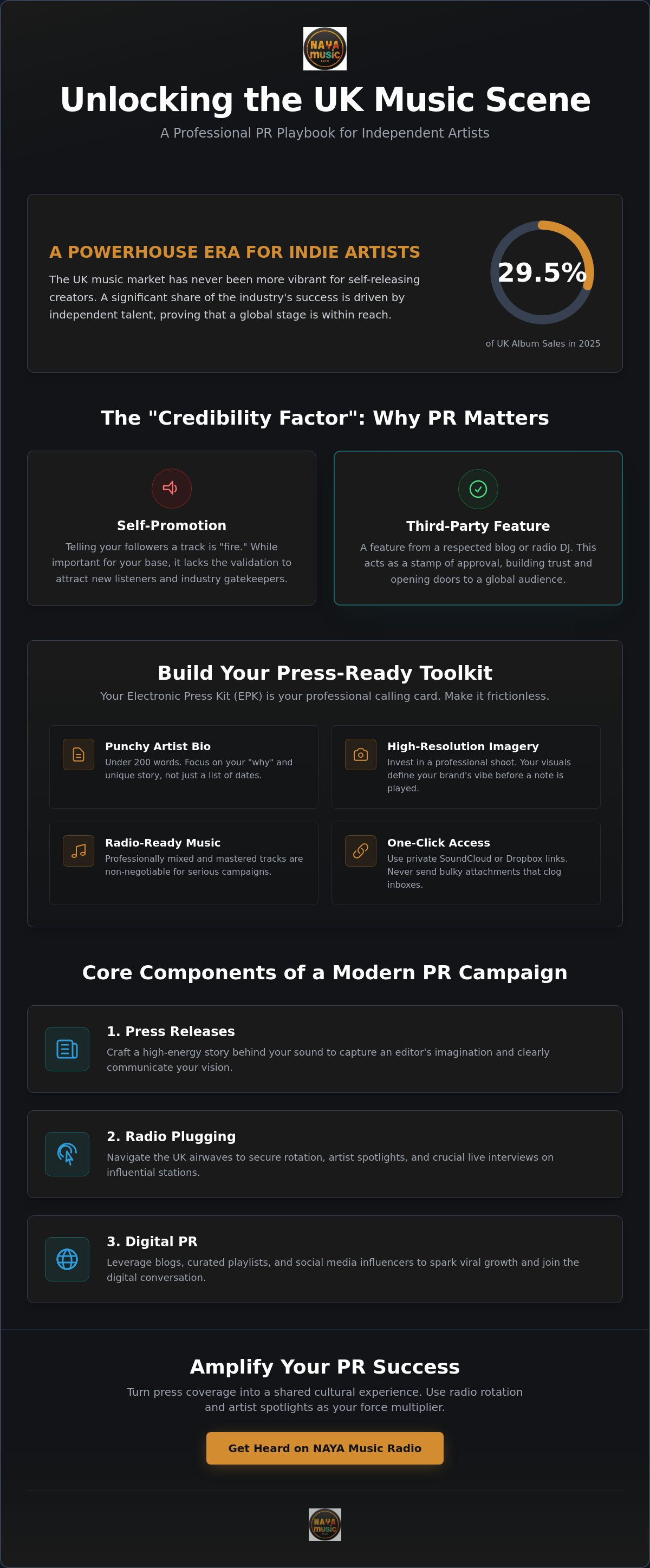
Did you know that independent releases accounted for a record 29.5% of the UK's Album Equivalent Sales in 2025? It's a powerhouse era for self-releasing creators, yet many still feel like the industry is locked behind a heavy, invisible door. You've likely felt the sting of sending endless emails to music promotion companies in the UK only to be met with total silence; or worse, watching your hard-earned cash vanish into "promo" packages that deliver zero real-world results. We understand that frustration because we believe your sound deserves a global stage, not a digital graveyard.
In this guide, you'll master the art of professional UK music promotion to turn those unopened emails into confirmed radio interviews and reputable blog features. We're breaking down exactly how to build a high-impact press kit, secure airplay on stations like BBC Radio 1, and use viral social media amplification to grow your movement. You're about to transform from a hidden gem into a professional brand that attracts fans and industry insiders alike. Let's build your destination for success.
Key Takeaways
- Understand the "credibility factor" and why third-party features act as the strategic bridge between your studio recordings and a global audience.
- Build a professional Electronic Press Kit (EPK) that serves as a frictionless calling card for busy UK journalists and radio DJs.
- Learn the step-by-step research methods to identify the right tastemakers for your specific genre before reaching out to music promotion companies UK.
- Decide between the investment of a professional agency and the sweat equity of DIY promotion by comparing industry costs and relationship gaps.
- Discover how to use radio rotation and artist spotlights to amplify your press coverage; this transforms your music into a shared cultural experience.
What is Music PR in the UK and Why Does It Matter for Independent Artists?
Think of UK music PR as the strategic bridge that connects your private studio recordings to the public ear. It's not just about getting a mention; it's about building a narrative that resonates with the culture. While some music promotion companies UK focus solely on numbers, true PR is about influence. It transforms a sound into a story, ensuring that when your track drops, it lands in a space where people are actually listening. By framing your art through a professional lens, you invite the world to join your movement.
There's a massive difference between you telling your followers a track is "fire" and a reputable editor at Clash or The Line of Best Fit saying it. This is the "credibility factor." A third-party feature acts as a stamp of approval that self-promoted social posts simply can't match. It builds trust with new listeners and industry gatekeepers alike. When a respected voice champions your sound, it validates your talent and gives potential fans a reason to hit play.
The UK media landscape is unique, highly centralized, and incredibly influential. From the taste-making power of BBC Radio 1 and Radio 6 Music to niche genre blogs, the reach is vast. Understanding the rich history of the Music of the United Kingdom helps you realize why these institutions hold such weight. In 2026, the game has shifted from "press only" to a high-octane blend of traditional media and digital amplification. It's no longer enough to just be in a magazine; you need to be part of the digital conversation.
The Core Components of a Modern PR Campaign
- Press releases: Crafting the high-energy story behind your latest sound to capture an editor's imagination instantly.
- Radio plugging: Navigating the UK airwaves to secure rotation, artist spotlights, and those crucial live interviews.
- Digital PR: Leveraging blogs, curated playlists, and social media influencers to spark viral growth across the web.
Why Independent Artists in the UK Need a PR Strategy
The digital market is saturated. With millions of tracks uploaded daily, professional transparency helps you cut through the noise. A solid PR strategy builds a professional footprint that attracts agents, labels, and global festival bookers. When you're researching various music promotion companies UK, remember that the goal is brand authority. When a promoter searches for you, they should find a trail of reputable coverage that proves you're ready for the big stage. Plus, archived press provides long-term value for your artist SEO, making you easy to find in a crowded scene.
Building Your Press-Ready Toolkit: Essentials Before You Pitch
Before you hit 'send' on a single pitch email, your foundation must be unbreakable. The UK's independent recorded music sector is at its most vibrant point in years, accounting for nearly 30% of the market in 2025. This surge means the standard for entry has never been higher. Busy journalists and music promotion companies UK process hundreds of submissions every single week. If your assets are messy, your music stays unheard. Professionalism isn't just a look; it's about removing every possible barrier between your sound and the person who can amplify it. You're the protagonist of this story, and your toolkit is your armor.
Crafting the Perfect Electronic Press Kit (EPK)
The Radio-Ready Music Checklist
A "radio-ready" track is a non-negotiable requirement for any serious UK campaign. Your music must meet professional mixing and mastering standards to stand up against the hits on BBC Radio 1 or Radio 6 Music. Aim for industry-standard LUFS targets, typically around -14, to ensure your volume levels are consistent with broadcast expectations. Don't forget the "clean" edit. If your track has explicit lyrics, a censored version is essential for daytime airplay and wider inclusivity. Without it, you're effectively closing the door on the biggest audiences in the country. Lastly, ensure your metadata and ISRC codes are correctly assigned. This technical detail is the only way to guarantee you get paid for every play you secure. When your assets are this sharp, you can confidently submit your song for free to start building your global stage and turning your tracks into a cultural movement.
How to Pitch Your Music to UK Media: A Step-by-Step Guide
Stop throwing darts in the dark. Many independent artists fall into the trap of the "spray and pray" method, blasting generic BCC emails to every contact they can find. This is why your inbox stays empty. While professional music promotion companies UK often have established lists, your success as an independent creator depends on surgical precision. You're not just looking for an open; you're looking for a champion who believes in your movement. Effective pitching is about building a relationship before you ever ask for a favour.
Personalisation is your secret weapon. UK journalists and DJs can spot a template from a mile away. If you haven't taken the time to listen to their latest radio programme or read their recent reviews, don't expect them to take the time to listen to your track. Your goal is to prove that your sound fits their specific aesthetic. This grounded, no-nonsense approach separates the amateurs from the professionals who are ready for a global stage.
Step 1: Identifying Your Target Media Outlets
- Social Sleuthing: Use platforms like X (Twitter) and LinkedIn to find the real names of UK music editors and radio producers. Follow them. Engage with their content. Understand what they actually champion.
- Tastemaker Feeders: Identify influential blogs that feed into larger publications like NME or The Guardian. Securing a feature on a respected niche site often acts as the catalyst for national coverage.
- Tiered Strategy: Map out your targets. Start with local London radio or regional stations before aiming for national UK networks. Building momentum locally makes the jump to BBC Radio 1 feel like a natural progression.
Step 2: Writing the Pitch That Gets a Yes
The subject line is your gatekeeper. It must be punchy, urgent, and descriptive. Avoid vague titles like "New Music Submission." Instead, try something like "PREMIERE: [Artist Name] - [Genre] - For Fans of [Big Artist Name]." This gives the reader an immediate "vibe" and a reason to click. Start your email with a high-energy hook that highlights your unique story or a recent milestone. This isn't the time for a 500-word essay. Keep it brief. Keep it rhythmic.
Social proof is essential. Mention any previous airplay, artist spotlights, or successful studio sessions you've had. This proves you aren't just another bedroom producer; you're a serious artist with a growing footprint. Finally, make the call to action frictionless. Ask for a specific outcome, such as an interview or a track review, and ensure your EPK link is clearly visible. If they have to hunt for your music, they'll simply move to the next email. If you don't hear back within 7 to 10 days, a single, polite follow-up is acceptable. Respect their time, stay on their pulse, and keep building your brand authority.
DIY PR vs. Hiring a UK Music PR Agency: Choosing Your Path
Every independent artist eventually reaches a crossroads: do you keep grinding on your own or do you invest in professional help? DIY promotion is your training ground. It's where you learn the pulse of your audience and refine your visual identity. However, scaling your sound to reach national UK airwaves often requires a different level of influence. While you can build a massive following on your own, the relationship gap between an independent creator and a major radio plugger can be wide. Agencies spend years cultivating trust with producers at BBC Radio 1 and 6 Music; their emails often jump to the top of the pile because of that established history.
Costs vary significantly across the industry. An entry-level digital campaign for a single might cost between £500 and £1,000 for a four-week cycle. Mid-tier agencies targeting national press and radio often charge between £1,000 and £3,000 for the "sweet spot" of a six-week campaign. For those targeting major label levels of visibility, multi-month retainers can exceed £5,000. The sweet spot for hiring professional PR is when your DIY efforts have created enough of a buzz that you require professional amplification to manage the momentum. Don't rush the process. Wait until your brand is mature enough to withstand the scrutiny of national critics.
The Pros and Cons of the DIY Approach
Choosing the DIY path gives you total creative control and keeps your financial investment at zero. This is essential for emerging creators who are still finding their rhythm and building a foundation. The downside is the sheer volume of time required to manage outreach while also creating new music. You'll likely face limited initial access to "gatekeeper" contacts who often prefer working with verified music promotion companies UK. To overcome this, focus on building your digital presence. You can achieve significant results by maximising your impact through artist promotion social media UK, which helps you reach global airwaves without an agency retainer.
What to Look for in a Professional UK PR Agency
If you're ready to scale, choose your partner with professional transparency. Genre specialisation is non-negotiable. An Afrobeat artist should avoid rock-centric PR firms because their contact lists won't match the specific cultural movement of the sound. Transparency is your best defense against bad investments. Avoid any agency that "guarantees" specific coverage or uses bot-driven results to inflate numbers. Real PR is about human relationships and rhythmic storytelling. Look for case studies that mirror your own career goals and prove the agency can deliver authentic growth. When you're ready to turn your studio sessions into a professional spotlight, you can join our artist management movement to take your brand to the next level.
Amplifying Your PR Success: The NAYA Music Radio Force Multiplier
Securing a blog feature or a press mention is a massive win, but it's only the beginning of your story. To truly break through, you need a force multiplier that turns that static coverage into a living, breathing movement. Radio rotation is that catalyst. While many music promotion companies UK stop at the press release, we believe the real magic happens when your sound hits the airwaves. Radio provides an immediate, visceral connection with listeners that a written review simply cannot replicate. It transforms your music from a file on a drive into a shared cultural experience that resonates across the country. When people hear your track while driving or working, it builds a level of familiarity that no social media ad can buy.
The power of the artist interview cannot be overstated. It's where you bridge the gap between being a name on a screen and a personality people want to follow. It's your chance to share the "why" behind your rhythm and connect with the 67.7% of UK listeners who drive recorded music revenue through streaming. By combining professional PR with 24/7 live radio streaming and artist spotlights, you create a feedback loop of credibility. Social media amplification then takes your radio slot and turns it into a viral, shareable moment that lives forever on your profile. This proves your brand authority to fans and festival bookers alike, showing them that you're an artist who's already on the move.
Frictionless Promotion with NAYA Music Radio
We've built a destination designed to remove every hurdle in your path. From physical studio rentals in London to global airwaves, the journey is frictionless and transparent. Our premium interview packages are crafted for emerging stars who are ready for professional storytelling that captures the pulse of the modern industry. We provide the tools you need to turn a single track into a cultural event. If you're ready to see how your sound holds up on a professional stage, you can Submit your music for free radio rotation. This is your invitation to bypass the traditional gatekeepers and speak directly to your audience through a platform that champions your creativity.
Joining the Movement
Community-oriented platforms are the future of independent music promotion in the UK. We aren't just a service provider; we're a supportive partner acting as a bridge between local scenes and international audiences. You can leverage our physical studio rentals in London to create high-quality, radio-ready content that demands attention from even the most jaded editors. In an era where independent releases account for nearly 30% of UK sales, having a professional home for your art is essential. We're here to help you navigate the complexities of digital promotion with business-like clarity and high-energy enthusiasm. The stage is set, and the microphone is open. Submit your music to NAYA Music Radio and start your journey today!
Step Into the Spotlight and Build Your Movement
Mastering the UK's music landscape requires more than just talent; it demands a professional footprint that commands respect. You've learned that a radio-ready sound and a frictionless EPK are your non-negotiable tools for success. Whether you're navigating the DIY path or researching music promotion companies UK to scale your reach, the goal remains the same: turning your creative studio sessions into a shared cultural movement. It's about shifting from being a local artist to becoming a global brand that attracts fans and industry insiders alike.
It's time to stop shouting into the void and start building your global stage. Through 24/7 global live radio streaming and professional studio rentals in London, we provide the infrastructure you need to be heard. Combined with integrated social media amplification, your sound won't just drop; it will resonate. Amplify your music story with NAYA Music Radio’s promotion services today and take control of your narrative. Your sound is the heartbeat of the UK scene. We're here to make sure the world feels the rhythm.
Frequently Asked Questions
How much does music PR cost in the UK?
Entry-level digital campaigns for a single typically start between £500 and £1,000 for a four-week cycle. Mid-tier agency support targeting national press and radio usually falls between £1,000 and £3,000 for a six-week campaign. Major album cycles aimed at national daytime rotation can exceed £5,000. These costs reflect the agency's established relationships and the time required for personalized outreach.
When should an independent artist hire a PR company?
You should consider hiring a professional when your DIY efforts have created an organic buzz that requires professional amplification to scale. If you've built a solid foundation on social media but find yourself hitting a ceiling with national radio or major blogs, it's the right time to research music promotion companies UK. Your brand must be mature enough to withstand the scrutiny of national critics before you invest.
Can I do my own music PR as an unsigned artist?
Yes, unsigned artists can successfully manage their own PR by investing "sweat equity" into research and personalized outreach. Many independent creators start by building their own press lists and using platforms like X (Twitter) to connect directly with tastemakers. While it's time-intensive, DIY PR allows you to maintain total creative control and keep your financial investment at zero while you find your rhythm.
What should be included in a music press release?
Your press release must include a punchy bio, high-resolution imagery links, and clear social proof like recent streaming milestones or airplay. Make the experience frictionless by providing a single link to your EPK rather than bulky attachments. Ensure your "why" is the center of the story so editors can quickly understand the movement you're building.
How do I get my music on BBC Radio 1 or Radio 6 Music?
The BBC Introducing uploader is your most direct and effective entry point for national airplay. Upload your best "radio-ready" track to your local station, and if it resonates, it can be fast-tracked to national producers. Professional radio pluggers also play a role by pitching tracks directly to daytime playlist committees once you've built significant local momentum.
Is music PR still relevant in the age of TikTok and social media?
PR is more relevant than ever because it provides the third-party credibility that viral social media posts often lack. While TikTok drives discovery, a feature in a reputable publication or a radio interview turns that fleeting attention into long-term brand authority. It acts as a force multiplier for your social media growth, proving to the industry that you're a serious professional.
How long does a typical UK music PR campaign last?
A typical UK music PR campaign lasts between four and eight weeks. This window allows enough time for the initial pitch, follow-ups, and the coordination of features to align with your release date. Some music promotion companies UK may offer longer retainers for full album cycles to ensure consistent visibility over several months.
What is the difference between a radio plugger and a PR agent?
A radio plugger focuses exclusively on securing airplay, playlist adds, and interviews on radio stations. A PR agent handles broader media coverage, including digital blogs, print magazines, and news outlets. While their roles often overlap in modern campaigns, the plugger's primary goal is the airwaves, while the agent builds your overall narrative across the press landscape.


